APAAR THUS FAR
Apaar Thus Far
APAAR was established on 25 March 2014 in a room in a rented house in Model Town, Jalandhar. A few weeks later, we moved to a two-storeyed shop in Chhoti Baradari which the owner kindly provided us rent-free until July 2015. We moved to the Punjab Institute of Medical Sciences ( PIMS) on 16 July, 2015, thanks to the benevolence of their Director.
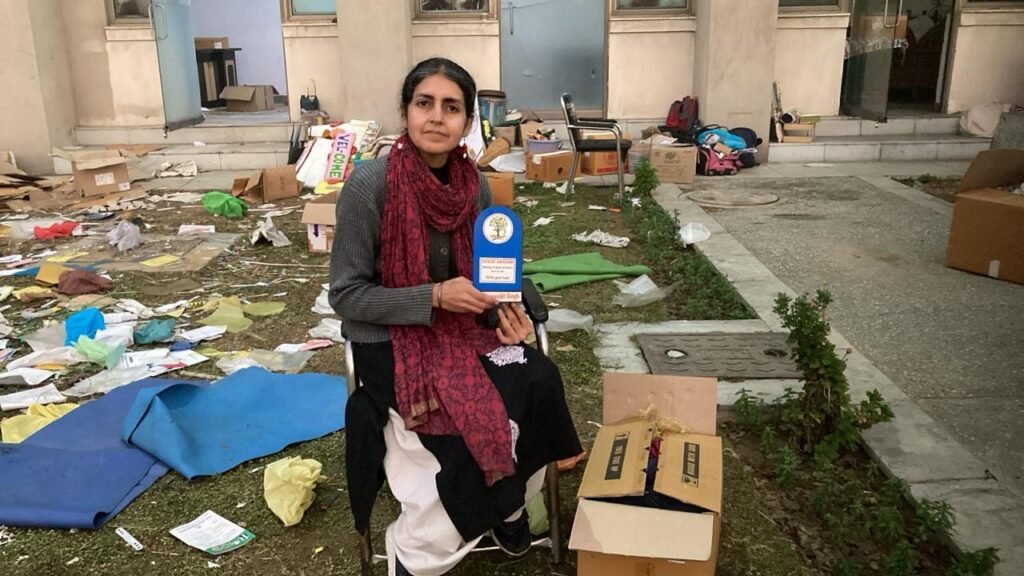
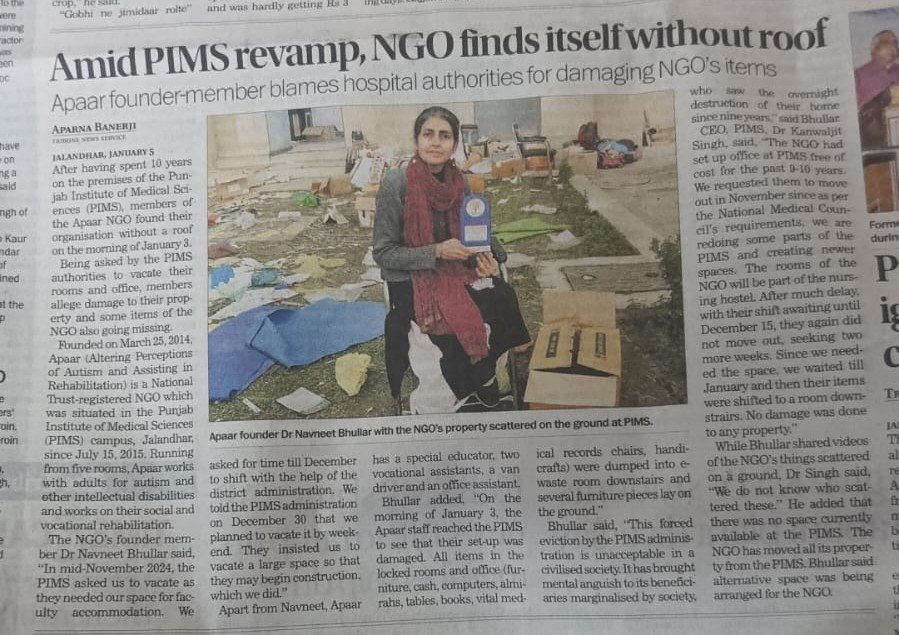
There we spent nine years until we were thrown out Jan 2, 2025 by the same Director with no apology and only 5 weeks notice. Know, dear reader, that the city of Jalandhar is a superb exhibit for ubercapitalism’s fervor and the resultant bankruptcy of ethics and humanism.
Pankaj Mishra says it well at the start of this text. PIMS, a medical college and hospital, proved with this act against an NGO , APAAR ( which is providing highly subsidised rehabilitation and mental health shelters to the severely marginalised community of adult PIDD) that it had merged well with the rest of the city in its crudity.
On Jan 2, 2025, after our ignominous ouster from PIMS, moved to an apartment owned by the Trustees of APAAR in a pleasant leafy neighborhood. This place is rent-free like PIMS was. We do miss gardening which was therapeutic to us all, especially to the oppressed clients we support. We launched an organic fruit orchard with 33 trees in three plots on the back of the PIMS building on March 14, 2018, which is the annual World Sikh Environment Day. We had a small kitchen garden by windows inside our PIMS building space- green sacks which grew leafy ajwain, palak, matar, and other veggies. Clients watered the orchard and weeded per their preference most Saturdays until Dec 2024.
With limited space, we currently (as of Sep 14, 2026 at time of writing this text) support 6-8 adults with PIDD in our sheltered workshop housed in a small apartment. We train in self-care skills, as well as cooking, ( and for those so inclined)yoga, music and vocational work. We sell paper bags to some pharmacies, and our APAARites painted pottery and beaded handicrafts remain as popular as ever. In addition, we support ( with medical care and quality physiotherapy )four PIDD villagers who are wheelchair bound due to cerebral palsy.
Since the summer of 2025, APAAR has suffered from a severe shortage of HR for many reasons, not the least being the bogus medical model of intellectual disability which is fostering profiteering and unregulated, exploitative therapy centres rather than admitting the malady- social oppression. Inclusion is only in name in the medieval times extant in today’s Punjab. PIDD ( and their families) are the silent, suffering oppressed.
With this HR crunch, one staff member of APAAR comes daily from Amritsar, and the founder has been working pro bono as manager since Jan 2026. Drivers come and go- the last two stayed for 4 months each and then emigrated to European countries. Punjab’s emigration brain drain crisis has ensured that APAAR is crawling, and often limping when it should be galloping with the vision it carries.
We plod on, happy with our major victories giving voice and space to PIDD, learning from them each day, and working hard toward societal change swimming against currents in Jalandhar. Our Founder, Dr Navneet Bhullar, is still waiting to be included in an SMO meeting (of government doctors) after meeting five consecutive District Commissioners and asking to be.
Two psychiatrists in town understand our vision, most have no interest in it, and one has actively impeded our work. This private practitioner, an MD in Psychiatry, refused to give APAAR staff permission to observe his addiction centre’s music therapy session just last year. Enough said.
How can you support us dear reader who has patiently read so far?
Send your teenage child / cousin who plays guitar/ ukelele/ harmonium to our Saturday cafe.
Volunteer at our Diwali stalls – these are often displayed in evenings and our staff is, yes you guessed right, not from Jalandhar.
Spread APAAR’s Insta and Facebook pages ( linked top right on every page here) so that
1. college students intern with APAAR. Only 5 interns in 12 years is not a happy record.
2. PIDD and their families know they have a voice and respite in APAAR.They face enormous oppression. Just read BLOGS on this website ( Founder’s Blog to start).
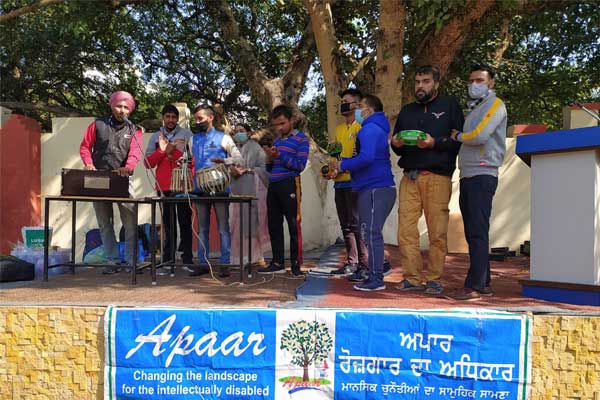
During the lockdown to counter Covid-19, APAAR’s sheltered workshop was closed from March 20 to July 26th, 2020. In this time, we continued to phone or video call clients confined to home as well as Community-based rehabilitation (CBR) families. APAAR staff salaries continued. We also started 2-hour home visits in early July of 2020 when families allowed us. Many APAARites were facing mental health challenges that needed assistance.
We welcomed all who wished to join us in playground time 45 minutes daily (except Sundays). The playground in front of our building was a green area with trees, flower beds, and scattered benches around basketball and volleyball courts. Outdoors, the risk of virus transmission was low and nature’s salutary effect on mental health is scientifically documented.
In Jan 2020, APAAR founder, Dr Navneet Bhullar visited a rural mental health project in District Mehsana, Gujarat, and a collaboration was formed. Start of work was delayed due to the pandemic and never did materialise.
On July 27th, 2020, we opened for half- days to mask-wearing clients with adequate social distancing and the presence of not more than 10 workers in the premises at one time. In Nov 2020, we began outings with our newly donated van. Not more than 5 persons would be in the van including the driver, windows stayed open and only long drives were undertaken: no picnicking or visiting parks. An account of that time in history : On the first outing in eight months, clients and a staff member did stop impromptu at a village dhaba, and enjoyed tea and biscuits on a sunny (November 12, 2020) afternoon in Kapurthala district on the road to Sultanpur Lodhi. They lingered awhile. Beautiful moments to treasure in this claustrophobic time
We also used lockdown time to provide skill development training to staff online, predominantly English language classes.
We need funds to spread and reach out to start Community Based Rehabilitation in more areas. Philanthropy is nearly non-existent and mental health is not something people easily understand the necessity of.